

Multi-Unit Property Investment in Canada: A Practical 2026 Guide

An architectural scale model of a modern multi-unit property on an office desk.

Investing in Multi-Unit Property in Canada

A Practical Guide for 2026

Financing, underwriting, due diligence and Canadian landlord considerations

Key takeaway: A multi-unit property can produce several rent payments from one acquisition, but the number of units changes how lenders assess the deal. Properties with two to four units are commonly financed through residential mortgage programs, while buildings with five or more units are normally underwritten as commercial assets. Before buying, calculate the property’s net operating income, debt-service coverage and cash flow using realistic rents, vacancy and repair reserves.

What is a multi-unit property?

A multi-unit property contains two or more separate dwellings within one building or on one legal parcel. Common examples include:

  • a duplex with two units;
  • a triplex or fourplex;
  • a small apartment building;
  • a mixed-use building with residential units above commercial space; and
  • a larger purpose-built rental property.

The legal use of the building matters as much as the physical number of units. A house divided into three apartments is not automatically a legal triplex. Investors should confirm zoning, building permits, fire-code compliance and the recognized unit count before relying on the advertised rent.

The distinction between two to four units and five or more units is also important. Lenders generally treat smaller properties as residential mortgages, subject to the borrower’s income and credit qualification. A five-plus-unit building is generally financed commercially, with greater emphasis on the property’s income, expenses and ability to cover its debt.

Why investors consider multi-unit properties

Multi-unit real estate can offer advantages that a single rental home cannot:

  • Several income sources: A vacancy in one unit reduces revenue but does not necessarily eliminate it.
  • Operating efficiencies: Units share major building components such as the roof, structure and mechanical systems.
  • Portfolio growth: One purchase can add multiple rental units.
  • More ways to improve income: Better operations, renovations and permitted unit upgrades may increase net operating income.
  • Owner-occupancy options: An investor may live in one unit of a smaller property while renting the others, subject to lender and insurer requirements.

These benefits do not guarantee a better return. A multi-unit property may require more capital, professional management and frequent maintenance. It can also carry expensive building-wide risks: a failed boiler, foundation problem or fire-safety upgrade can affect every unit at once.

Start with the investment strategy—not the listing

Before viewing properties, decide what the investment needs to accomplish. An investor prioritizing current income may assess a property differently from someone prepared to accept modest initial cash flow in exchange for redevelopment or long-term appreciation potential.

Define at least five items:

  1. the cash available for the down payment, closing costs and reserves;
  2. the minimum acceptable cash flow and return;
  3. whether you will occupy a unit;
  4. how much management work you can take on; and
  5. the geographic area in which you can confidently evaluate rents and expenses.

This prevents a common mistake: adjusting the analysis until an attractive listing appears financially viable.

How to analyze a multi-unit property

Marketing materials are a starting point, not an underwriting model. Review the current rent roll, leases, operating statements, utility bills, tax records and repair history, then build your own projections.

1. Estimate effective gross income

Begin with the annual rent that can reasonably be collected. Add recurring income such as parking or laundry, then deduct an allowance for vacancy and unpaid rent.

Effective gross income = potential rental income + other income − vacancy and collection allowance

Do not assume every below-market lease can immediately be increased to market rent. Provincial tenancy legislation, notice requirements and rent-control rules may restrict the timing or amount of increases.

2. Calculate net operating income

Net operating income, or NOI, is the property’s income after normal operating expenses but before mortgage payments, income tax, depreciation and major capital expenditures.

NOI = effective gross income − operating expenses

Operating expenses can include:

  • property taxes;
  • building insurance;
  • utilities paid by the owner;
  • routine repairs and maintenance;
  • property management;
  • cleaning, landscaping and snow removal;
  • licensing and inspection costs; and
  • an allowance for replacement or ongoing maintenance.

Separate ordinary operating costs from major capital work, but account for both when deciding how much cash the investment will require.

3. Calculate the capitalization rate

The capitalization rate compares the property’s NOI with its purchase price:

Cap rate = annual NOI ÷ purchase price

A higher cap rate is not automatically better. It may reflect greater vacancy, deferred maintenance, weaker demand or another risk. Compare a property only with similar buildings in the same local market and time period.

4. Test debt-service coverage

Commercial lenders commonly examine the debt-service coverage ratio, or DSCR:

DSCR = annual NOI ÷ annual mortgage payments

A DSCR of 1.00 means the projected NOI equals the debt payments, leaving no operating cushion. Required ratios vary by lender, insurer, program and property. Obtain the applicable requirement from the lender or mortgage professional underwriting the transaction rather than relying on a universal benchmark.

5. Calculate cash-on-cash return

Cash-on-cash return measures annual pre-tax cash flow against the cash invested:

Cash-on-cash return = annual pre-tax cash flow ÷ total cash invested

Total cash invested should include more than the down payment. Add land-transfer tax, legal and appraisal fees, inspections, lender fees, immediate repairs and the initial reserve fund.

Worked example: underwriting a fourplex

The following simplified example demonstrates the method. It is not a forecast or a claim about current rents, mortgage rates or expenses in any particular Canadian city.

Item Annual amount
Four units at $2,000 per month $96,000
Parking and laundry $3,600
Potential gross income $99,600
Less 4% vacancy/collection allowance ($3,984)
Effective gross income $95,616
Property taxes ($12,000)
Insurance ($4,200)
Owner-paid utilities ($7,500)
Repairs and routine maintenance ($7,000)
Management allowance ($6,700)
Landscaping, snow and administration ($3,500)
Net operating income $54,716


If the purchase price were $1,150,000:

Cap rate = $54,716 ÷ $1,150,000 = 4.76%

If annual mortgage payments were $43,000:

DSCR = $54,716 ÷ $43,000 = 1.27

That leaves approximately $11,716 before income tax and major capital expenditures. If the buyer invested $300,000 in the down payment, closing costs and immediate work, the simplified pre-tax cash-on-cash return would be:

$11,716 ÷ $300,000 = 3.91%

The next step is sensitivity testing. Recalculate the deal with higher mortgage costs, a longer vacancy, a major repair and lower-than-expected rent. An acquisition should not depend on every assumption going perfectly.

Financing two- to four-unit properties

Financing depends on occupancy, unit count, price, borrower qualification and lender policy.

For an eligible owner-occupied property, mortgage loan insurance may permit a down payment below 20%. CMHC’s homeowner-loan rules differentiate between one- to two-unit properties and three- to four-unit properties. For eligible one- to two-unit homeowner loans, financing may reach 95% loan-to-value; three- to four-unit properties may reach 90% loan-to-value. Purchase-price and qualification limits also apply.

For a non-owner-occupied property with two to four units, CMHC describes its small-rental program as allowing financing up to 80% loan-to-value—effectively a minimum 20% equity contribution—subject to lender and insurer approval.

These are program limits, not automatic approvals. Credit, income, debt ratios, property condition, appraised value and rental-income treatment can change the result. Confirm the current terms with the lender and insurer before waiving a financing condition.

Primary source: CMHC mortgage loan insurance information for homeowner and small-rental loans

Financing properties with five or more units

Five-plus-unit rental buildings are usually evaluated as commercial properties. The lender will normally examine:

  • stabilized NOI;
  • DSCR;
  • existing leases and rent collection;
  • vacancy and local rental demand;
  • the building’s age and condition;
  • environmental and appraisal reports;
  • the borrower’s net worth and experience; and
  • planned capital improvements.

CMHC offers several multi-unit mortgage-loan-insurance products. Terms differ by product. Programs such as MLI Select can provide enhanced leverage or amortization when a project earns sufficient points through affordability, energy efficiency or accessibility commitments. Those enhanced terms should not be presented as standard financing available to every apartment purchase.

Ask for a written financing analysis covering the maximum loan, amortization, interest-rate assumptions, insurance premiums, lender fees, required reserves and recourse provisions.

Primary source: CMHC multi-unit mortgage loan insurance products

Canadian landlord rules are provincial

There is no single Canadian rulebook governing residential tenancies. Rent increases, deposits, notices, evictions and dispute resolution vary by province.

In Ontario, most residential tenancies fall under the Residential Tenancies Act, 2006. The province publishes an annual rent-increase guideline for most covered units. However, exemptions apply, including to many units first occupied for residential purposes after November 15, 2018. A buyer should therefore inspect the occupancy history and leases of each unit rather than assuming one rule applies to the entire building.

British Columbia uses its own Residential Tenancy Act and Residential Tenancy Branch process. Alberta has different rules again under its Residential Tenancies Act and dispute-resolution system. Advice based on another province can produce an incorrect financial forecast or an unlawful management plan.

Use the applicable provincial source and obtain legal advice for the specific property:

Due diligence before buying

A multi-unit acquisition should normally remain conditional until the buyer and appropriate professionals have completed satisfactory due diligence. The scope depends on the property, but commonly includes the following.

Financial review

  • reconcile leases and the rent roll with bank deposits;
  • inspect arrears, incentives and prepaid rent;
  • verify taxes, insurance, utilities and service contracts;
  • examine at least two or three years of operating information where available;
  • identify expenses paid personally by the owner or omitted from the statement; and
  • model upcoming capital expenditures separately from NOI.

Building and environmental review

  • professional building inspection or property-condition assessment;
  • roof, foundation, plumbing, electrical and HVAC condition;
  • fire-safety systems and inspection records;
  • environmental assessment where appropriate;
  • mould, asbestos, underground tank or contamination risks; and
  • remaining useful life of major building components.

Legal and regulatory review

  • title, survey and registered easements;
  • zoning and permitted use;
  • building permits and legal unit count;
  • outstanding work orders or property-standard violations;
  • leases, notices and active tenant disputes; and
  • applicable licensing, parking and occupancy requirements.

Market review

  • comparable rents from genuinely similar units;
  • vacancy and new rental supply;
  • population and employment trends;
  • planned transit, infrastructure and development; and
  • recent sales of comparable multi-unit properties.

Government data is generally more defensible than an unsourced market summary. For example, Statistics Canada reported that Calgary and Edmonton remained leading destinations for interprovincial migration in 2024–25. That is relevant to rental demand, but it does not prove that any particular Calgary property is a good investment.

Primary source: Statistics Canada population estimates for subprovincial areas, 2025

Common mistakes to avoid

Using advertised rent as guaranteed income

Confirm whether the figure represents current legal rent, projected market rent or rent achievable only after renovation and tenant turnover.

Underestimating operating costs

Small buildings often appear unusually profitable because the seller’s statement omits management, reserves, labour or repairs performed by the owner.

Treating appreciation as certain

Future resale value depends on financing conditions, local supply, demand and the property’s income. The acquisition should be evaluated under conservative scenarios.

Ignoring the legal unit count

Income from an unauthorized unit may be interrupted by enforcement or expensive compliance work. Verify legality before valuing the income stream.

Using a market-wide cap rate without adjustment

Cap rates differ by neighbourhood, building condition, unit mix, rent quality and transaction date. A broad city average cannot replace comparable sales.

Spending every available dollar on closing

The building will still require cash after purchase. Maintain reserves for vacancies, insurance deductibles, repairs and unexpected capital work.

Frequently asked questions

How much down payment is required for a multi-unit property in Canada?

It depends on occupancy, number of units, purchase price and financing program. Eligible owner-occupied properties with two to four units may qualify for insured financing below 20% down. A non-owner-occupied two- to four-unit property commonly requires at least 20% equity. Five-plus-unit commercial financing is based on the property’s underwriting and the applicable lender or insurance program.

Is a duplex or triplex automatically more profitable?

No. An additional unit creates more potential income but may also increase the purchase price, utilities, repairs and management. Compare NOI, required capital and risk—not just gross rent or unit count.

What is a good cap rate?

There is no Canada-wide “good” cap rate. Compare recent transactions involving similar buildings in the same submarket, then consider condition, lease quality and growth risk. A lower-risk asset may trade at a lower cap rate.

Can RRSP funds be used to buy a rental property?

A normal RRSP withdrawal used for a pure rental-property down payment is generally taxable and does not qualify for the Home Buyers’ Plan unless the statutory occupancy and eligibility conditions are met. Specialized RRSP-held mortgage investments involve tax and prohibited-investment rules. Obtain advice from a qualified tax professional before attempting such a structure.

Which documents should a buyer request?

At minimum, request the rent roll, leases and amendments, operating statements, tax and utility records, insurance information, service contracts, repair history, permits, inspection records and notices involving tenants or municipal authorities.

Is a multi-unit property right for you?

A multi-unit property may suit an investor who has sufficient capital and reserves, understands the local rental market and is prepared to operate a small housing business. It may be less suitable for someone seeking a passive investment, relying on immediate rent increases or unable to absorb a major repair.

The most useful question is not simply whether multi-unit real estate is a good investment. It is whether a particular property—at a particular price, with verified income and expenses—meets your return requirements under conservative assumptions.

Get help evaluating a multi-unit opportunity

Central Commercial Realty helps investors assess commercial and multi-unit real estate opportunities across Toronto and the Greater Toronto Area. Our role can include reviewing the investment strategy, identifying suitable properties, coordinating due diligence and working with the buyer’s financing, legal and accounting professionals.

To discuss a specific acquisition, contact Central Commercial Realty. Any investment decision should be based on independent financial, legal, tax and property advice appropriate to the transaction.

Commercial Real Estate Toronto: A Complete Guide

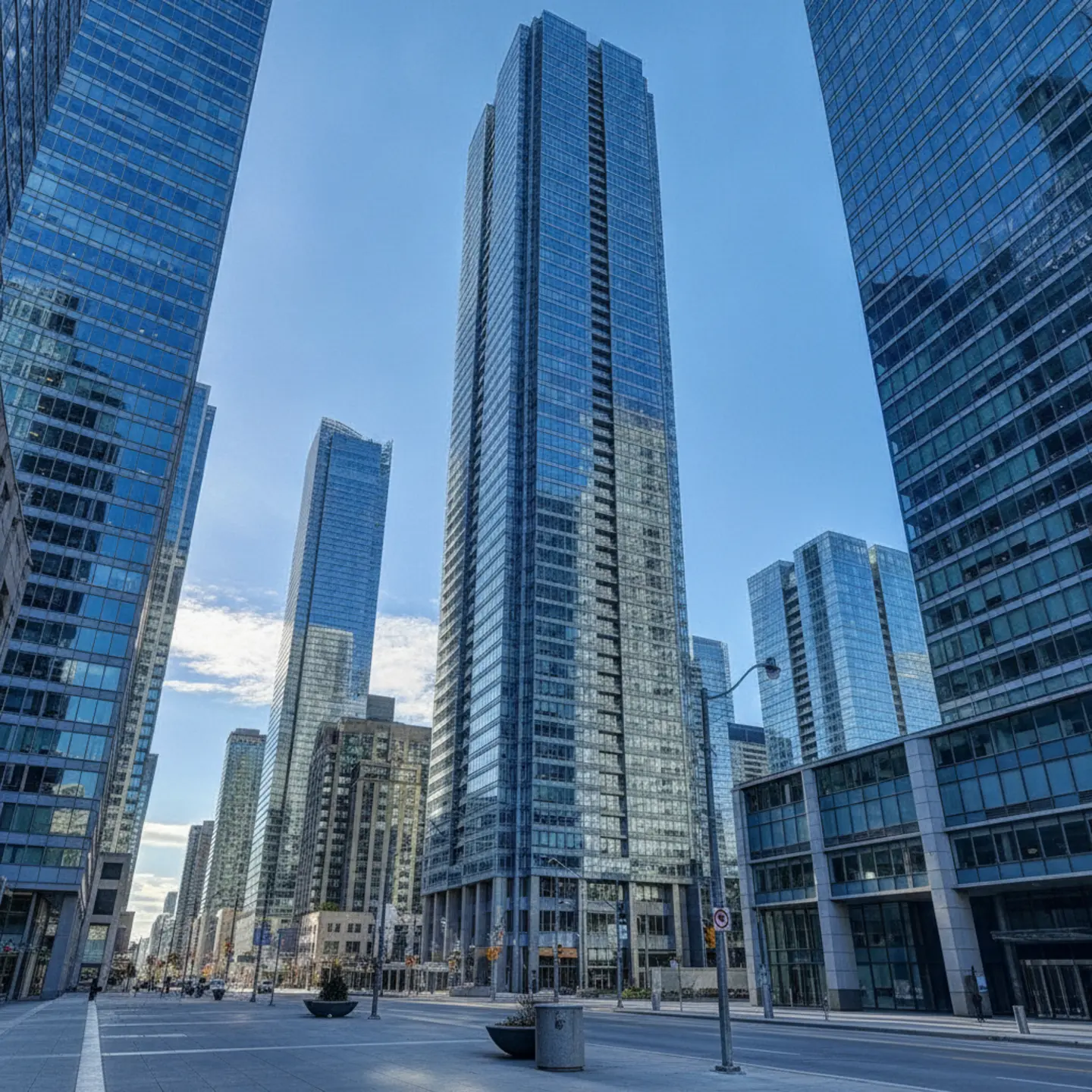
Commercial buildings in Toronto — guide to buying and leasing commercial property in the GTA

Commercial Real Estate Toronto: Buyer and Tenant Decision Guide

Decision summary: A Toronto buyer should plan for lender equity requirements, property-level underwriting and enough time to verify income, physical condition, environmental history and permitted use. A tenant should compare total occupancy cost—not merely the advertised rent—and negotiate renewal, assignment, restoration and operating-cost language before signing. This guide is organized around those two decisions.

A Toronto commercial transaction is rarely won by finding a listing first. It is won by confirming what the income statement omits, what the lease transfers to the tenant, what the zoning permits and what the building will require after closing. The sections below follow the documents and decisions that buyers and tenants actually encounter.

Scope: This article covers acquisition, leasing, zoning and transaction due diligence. For NOI, capitalization-rate calculations and return comparisons, use our dedicated Cap Rates in Toronto guide. Keeping the topics separate prevents the same investment analysis from being repeated across both guides.

The Toronto Market in Brief

Toronto’s industrial, office and retail properties should not be underwritten from one city-wide narrative. Availability, tenant demand, inducements and operating costs vary by submarket, building quality and use. Older office assets can carry repositioning costs that do not appear in asking prices; retail performance can change block by block; and industrial assumptions should be checked against current availability and lease evidence. Review the latest TRREB commercial reports and current brokerage research, then test the conclusion against comparable properties near the subject site.

What this means practically: the sector you buy into matters as much as the specific building, and city-wide averages tell you little about a specific corner of Scarborough or a plaza in Vaughan.

Buying Commercial Property in Toronto

Step 1: Financing — Expect 25–35% Down

Commercial financing works differently from residential. The down payment for a commercial property in Ontario is typically 25% to 35% of the purchase price, and lenders underwrite the property’s income — its rent roll, lease quality, and operating history — alongside your financials and business plan. Owner-occupied purchases can access different programs (including CSBFL-adjacent options for smaller deals where a business purchase includes premises).

Get pre-approval before you search. It defines your real budget and makes your offers credible — in competitive situations, a conditional-on-financing offer from an unvetted buyer loses to a clean one every time.

Step 2: The Search — On-Market Is Only Half the Market

MLS and commercial listing platforms are a starting point, but a meaningful share of Toronto commercial deals — particularly businesses sold with their real estate, and plaza units in tightly held corridors — trade off-market. Sellers of income properties often prefer quiet processes: no tenant alarm, no competitor curiosity. Access to that inventory comes through broker networks, not portals.

Step 3: Valuation — Three Methods, One Question

Commercial value is established three ways: the income approach (NOI ÷ cap rate — the standard for income-producing property), the sales comparison approach (recent comparable transactions), and the cost approach (replacement cost, used for special-purpose buildings). For most Toronto income properties, the income approach governs — and the quality of the NOI behind it is where valuations are won or lost. The full math, current GTA cap-rate ranges by asset class, and a worked example are in our cap rates guide.

Step 4: Due Diligence — Where Deals Are Protected

Due diligence is the most intensive phase and the least skippable. The core checklist for a Toronto commercial acquisition:

  1. Financial verification — actual rent rolls, leases, and expense statements, not the seller’s summary. Confirm every tenant’s terms, renewal options, and arrears.
  2. Building condition assessment — roof, HVAC, structure, and the capital expenditures coming in the next five years.
  3. Environmental site assessment (Phase I, sometimes Phase II) — non-negotiable for anything with automotive, dry-cleaning, industrial, or fuel history. Environmental liability transfers with title.
  4. Zoning and permitted-use verification — that your intended use is actually permitted as-of-right (see the zoning section below — this is the most common trap we see).
  5. Title, surveys, and work orders — outstanding city work orders and easements surface here.

A typical conditional period runs 30–90 days depending on complexity. Rushing it to win a bid is how buyers inherit six-figure surprises.

Leasing Commercial Space in Toronto

NNN vs. Gross: The Difference That Changes Your Budget

The two dominant structures:

  • Gross lease — one all-inclusive payment; the landlord covers property taxes, insurance, and common-area maintenance (CAM). Predictable, simpler, common in older office buildings.
  • Triple-net (NNN) lease — lower base rent plus your proportionate share of taxes, insurance, and maintenance (the “TMI” or “additional rent” line). Standard for retail and industrial.

The trap: comparing an NNN base rate against a gross rate as if they’re the same number. A $20/sq.ft. NNN space with $14 TMI costs more than a $32 gross space. Always compare total occupancy cost per square foot, and ask for the TMI history — CAM charges that jump yearly are a landlord telling you something.

What Space Costs

Rates vary enormously by class and corridor — downtown Class A office, suburban plaza retail, and GTA industrial occupy entirely different price universes, and quoted “asking” rates move with the market. Rather than printing numbers that will be stale in a quarter: current, corridor-specific rates are exactly what a broker’s recent comparables are for, and we’re glad to pull them for the areas you’re considering.

Lease Terms That Matter More Than Rent

  • Term and renewal options — a below-market rate on a 3-year term with no renewal right is a demolition clause away from moving costs.
  • Permitted use — the clause that decides whether you can add a service, sublet, or sell your business with the lease. For business owners planning an eventual sale, assignability is the clause your future buyer’s lawyer reads first.
  • Tenant improvement allowance — negotiable, especially in the current office market.
  • Demolition and relocation clauses — increasingly common in development-pipeline corridors; understand yours before you invest in leaseholds.

The process: shortlist → tour → letter of intent (LOI) on key terms → formal lease negotiated with your lawyer → sign. Never sign a commercial lease without legal review — unlike residential tenancy, commercial tenants have few statutory protections in Ontario; the lease is your protection.

Neighbourhood Analysis: Where the Averages Break Down

City-wide data hides the street-level reality. Three examples of how different Toronto commercial ecosystems are:

Neighbourhood Best For Character Watch Out For
Financial District Finance, law, corporate HQ Prestige, PATH access, professional density Highest rates in the city; limited parking; Class B space here still competes with Class A elsewhere
Yorkville Luxury retail, galleries, high-end services Affluent traffic, international profile Extreme entry cost; seasonal fluctuation
Liberty Village Tech, media, creative agencies Loft inventory, young workforce Congested transit; rapid redevelopment changing the tenant mix

The same analysis applies with different variables in Scarborough plazas, Vaughan industrial parks, or Richmond Hill’s Yonge corridor — each has its own rent logic, tenant ecosystem, and development pipeline.

Zoning: The Trap That Catches the Most Buyers

Toronto’s Zoning By-law 569-2013 dictates what each property can legally be used for — and a change of use can trigger requirements the building can’t satisfy.

Real-pattern case study: converting a retail unit (zoned Commercial Local, CL) into a restaurant.

  • “Eating Establishment” is a different use than retail — it must be separately permitted in that zone’s provisions, and in many CL zones it isn’t as-of-right.
  • The use change can trigger parking requirements impossible to meet on-site in a dense neighbourhood — forcing a Committee of Adjustment application (months of timeline, no guaranteed outcome).
  • Layer on building permits for the kitchen build-out, commercial ventilation requirements, licensing, and health inspections.

A property’s zoning isn’t a label; it’s a rulebook that can make or break your business plan. Verify permitted use before waiving conditions — with the city directly or through your broker — never on the seller’s assurance.

Frequently Asked Questions

How much is a down payment for a commercial property in Ontario?

Typically 25% to 35% of the purchase price. The exact requirement depends on the lender, property type, the strength of the property’s income, and your financials. Owner-occupied properties and business-with-property purchases can access different structures, sometimes with lower effective equity requirements.

How long does buying commercial property in Toronto take?

Plan for 3 to 6 months from offer to closing: 30–90 days of conditional due diligence (financing, inspections, environmental, zoning) plus closing timelines. Off-market deals with clean records move faster; anything with environmental history or complex tenancies moves slower.

What’s the difference between a triple net (NNN) and gross lease?

Who pays operating costs. Gross: one flat payment, landlord covers taxes, insurance, and maintenance. NNN: lower base rent plus your proportionate share of those costs (TMI). Compare total occupancy cost per square foot, never base rents across different structures.

Can a foreigner buy commercial property in Canada?

Yes — the federal foreign-buyer prohibition targets residential property; commercial real estate is generally unrestricted. Non-residents face specific financing requirements and tax implications (including withholding on rental income), so specialized legal and tax advice is essential.

How do I find commercial property for lease in Toronto?

Listing platforms cover part of the market; a commercial broker adds off-market inventory, corridor-specific rate knowledge, and LOI/lease negotiation. For retail specifically, walking target corridors still surfaces spaces before they hit any portal.

What are the types of commercial zoning in Toronto?

The major categories include Commercial Residential (CR), Commercial Local (CL), and Employment/Industrial (E) zones, each governing permitted uses, density, height, and parking. Always verify a specific property’s zone and permitted uses with the City of Toronto before committing to a use-dependent plan.

Is it better to buy or lease commercial space for my business?

Buying builds equity, fixes occupancy costs, and adds a saleable asset — at the cost of a large down payment and concentration risk. Leasing preserves capital and flexibility. The practical test: if your business’s returns on reinvested capital beat real estate returns, lease; if you want the property as your retirement asset, buy. Many of our clients buy the property through the same transaction as the business operating in it.

What due diligence is required when buying commercial real estate?

At minimum: verified financials and leases, a building condition assessment, a Phase I environmental site assessment, zoning and permitted-use confirmation, and title/work-order searches. Skipping the environmental assessment on any property with automotive, industrial, or dry-cleaning history is the single costliest shortcut in commercial buying.

A Toronto Transaction Checklist Before You Commit

Buying or leasing commercial property in Toronto is a process that rewards verification over speed: the right financing structure, the full market (not just the listed half), disciplined due diligence, and zoning confirmed before conditions are waived. The market’s complexity is exactly why local, transaction-level knowledge outperforms city-wide data.

If you’re evaluating a purchase or a lease anywhere in Toronto or the GTA, talk to our team or start with a free consultation — we handle both the property and the business side of commercial transactions daily. Call us at (416) 500-8777.


About the author: Morteza Sedighian is the Broker of Record at Central Commercial Realty and has over 10 years of real estate experience serving Toronto and the GTA.

Last updated: July 4, 2026


Sources

A Smart Buyer’s Guide to Evaluating a Business Opportunity in Toronto & GTA

A Smart Buyer's Guide to Evaluating a Business Opportunity in Toronto & GTA

A Smart Buyer’s Guide to Evaluating a Business Opportunity in Toronto & GTA
Buying a business in Toronto or the GTA is one of the most significant financial decisions you will ever make. What looks promising at first glance may tell a very different story once you dig deeper. The best buyers are not just financially prepared — they are curious, thorough, and ask the right questions before signing anything. Here is what to focus on when evaluating a business opportunity in Ontario.

H2: Start With the Asking Price
Before anything else, understand how the seller arrived at their asking price. A well-priced business will have a clear, data-backed rationale — supported by verified financial statements, tax returns, and a defensible valuation methodology. If the numbers feel inconsistent or the seller cannot clearly explain their pricing, that is your first warning sign. In the GTA market, transparent financials are not optional — they are the foundation of every sound acquisition.

H2: Understand Why the Seller Is Walking Away
One of the most revealing questions you can ask is why the owner is selling. Retirement, health, or a career change are straightforward motivations. However, if the answer feels evasive or inconsistent, it may signal underlying problems with the business. Understanding seller motivation also gives you negotiating leverage — a motivated seller who needs to close quickly is in a very different position than one who is happy to wait for the right offer.

H2: Assess Whether the Business Is the Right Fit for You
Even a profitable, well-run business can fail under the wrong ownership. Every business demands a specific set of skills, industry knowledge, and management style. Before moving forward, honestly evaluate whether your background and experience align with what the business actually requires day to day. A mismatch between owner capability and operational demands is one of the most common reasons acquisitions underperform after closing.

H2: Identify Risks and Hidden Dependencies
Dig into the risk profile of the business carefully. Key areas to investigate include:

Customer concentration — does the business rely heavily on one or two major clients?
Supplier dependencies — are there single-source suppliers that could disrupt operations?
Legal exposure — are there any outstanding disputes, claims, or regulatory issues?
Lease terms — is the property lease transferable and on favorable terms?

Any one of these factors can significantly affect the long-term viability of your investment and should be addressed during due diligence before you make an offer.

H2: Review Operations and Staff Stability
A business with well-documented operational procedures is far easier to take over than one that runs entirely on the owner’s institutional knowledge. Ask whether there are written processes, training materials, and systems in place. Equally important is understanding what key employees plan to do once ownership changes. Losing critical staff during a transition can disrupt operations, damage client relationships, and impact revenue almost immediately.

H2: Learn From the Seller’s Experience
Some of the most valuable insights come from asking the seller what they would have done differently. This question often surfaces missed opportunities, operational inefficiencies, and hard lessons that never appear in a financial statement. A seller who is candid about their experience is giving you a roadmap — both for what to avoid and where you might find room to grow the business under new ownership.

H2: The Bottom Line
Evaluating a business opportunity in Toronto or the GTA takes time, patience, and a systematic approach. The more questions you ask and the deeper you dig, the more confident you will be when it comes time to make a decision. Due diligence is not just a legal formality — it is the foundation of a successful acquisition.
At Central Commercial Realty, we guide buyers through every stage of the evaluation process — from accessing confidential listings to completing due diligence and closing the deal. Contact us today for a free consultation.

Continue reading